Coatings
Coating or replacing: when a metal roof coating is the right call
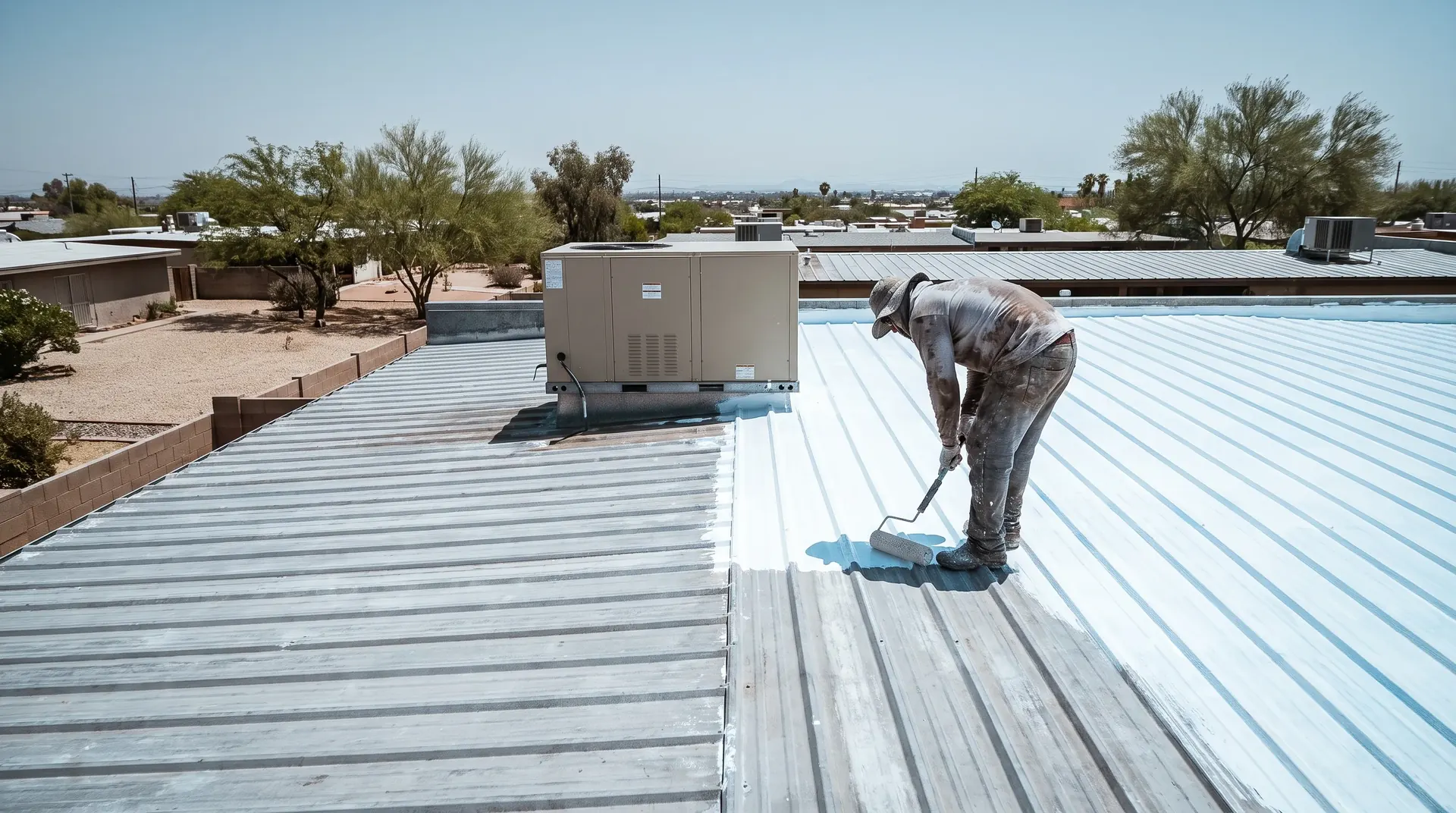
A coating is one of the best value things you can do to a metal roof in this climate, and one of the worst things you can do to the wrong one. The difference is not subtle and it is not a matter of opinion. It comes down to a single question: is the metal underneath still sound.
Get that answer right and a coating gives a tired roof a genuinely new surface. Get it wrong and you have spent real money sealing a failing roof up where nobody can see what it is doing.
A new surface, not a new roof
A roof coating is a liquid applied membrane. It goes on over the existing metal, cures into a continuous flexible skin and takes over the job of shedding water and standing between your roof and the sun.
The word that matters is continuous. An exposed fastener metal roof is a system of separate pieces with thousands of joints and holes in it, every one of them a potential failure point. A coating turns that into one unbroken surface. That is why it is such a good fit for this climate, where the sun is the thing doing the damage and the damage is distributed across the entire roof rather than concentrated in one place.
What a coating is not is a structural repair, a substitute for fixing defects, or a way to get more life out of metal that has already corroded through.
When coating is the right call
Weathered but sound
The ideal candidate is a roof that looks tired and is not failing. Chalky, faded, oxidised panels with the original finish long gone, but metal that is still solid, structure that is still good, and no perforation anywhere.
That roof is not near the end of its life. It has simply lost its coating, in the original sense of the word, and giving it a new one is exactly the right intervention.
A whole roof full of small vulnerable points
Long runs of exposed fasteners and end laps, all installed at the same time and all approaching the end of their service life together. Chasing those individually means a repair visit every year or two for the foreseeable future.
Detailing and coating the lot in one operation deals with the entire population at once. On a large roof that is frequently the cheaper path over any reasonable time horizon.
Low slope roofs where water sits
Carports, Arizona rooms, park models and patio additions with very little fall. Water lingers on these roofs rather than running off, and a lapped panel system is not really designed for standing water. A continuous membrane is much better suited to it.
When it is not
Perforation, corrosion through the sheet, or a bad structure
If there are pinholes, if the metal has gone soft and flakes through, or if the purlins and decking underneath have been repeatedly wet and have started to go, a coating is the wrong answer.
It will look like a solved problem for a while. Water will continue getting in at the perforations, now travelling underneath a membrane where it cannot be seen and cannot be traced, and when it eventually surfaces the diagnosis is far harder than it would have been.
As a substitute for doing the repairs
This is the most common way coatings get a bad name, and it is worth stating plainly. A coating rolled over a roof with backed out fasteners, open laps and a split pipe boot hides all of those beautifully.
Every one of those defects has to be repaired before anything is applied. The coating is what you do after the repairs, not instead of them.
How to tell which you have
The honest answer is that somebody has to get on the roof and look closely, because the distinction between deep surface rust and actual perforation is not visible from the ground and frequently not obvious from ten feet away either.
What you can assess yourself is the general story. A roof that has never leaked and simply looks old is a likely candidate. A roof that has been leaking in several places for a few seasons, or has visible rust with holes in it, probably is not. A roof somebody has already coated once and which is leaking again needs investigating rather than recoating.
If somebody has offered to coat your roof without having been on it, that is worth noticing.
Common questions
Is recoating a metal roof worth it?
On a sound weathered roof, very often yes, because it addresses sun damage across the whole surface at once without replacing anything. On a roof with corrosion through the metal it is money spent delaying a conversation. The condition of the roof decides it, not the price.
What is the best coating to put on a metal roof?
It depends on the roof rather than the brand. Silicone systems handle standing water and ultraviolet exposure well, which suits low slope Valley roofs. Acrylics are easier to work with and to recoat later. What matters much more than the choice is that whatever is used goes onto a properly repaired and properly cleaned surface at the thickness it was designed for.
What are the disadvantages of roof coatings?
Two real ones. A coating conceals whatever is underneath it, so unrepaired defects become much harder to find later. And it is a maintenance surface rather than a permanent one, so it will need recoating in due course. It also cannot fix structure or metal that has already gone.
Is it cheaper to paint or replace a metal roof?
Painting and coating are different things. Paint is a finish and is mostly about appearance. A coating system is a thicker applied membrane doing a waterproofing job. Either is dramatically cheaper than replacement, but only one of them is a roofing intervention, and only on a roof that is sound enough to take it.