Service
Metal roof coating and recoating
A coating gives a tired but sound roof a new surface. It does not give a failed roof a second life, and we will tell you which one you have.
Seams and fasteners detailed first
Metal Roof Coating and Recoating
What a coating is actually for
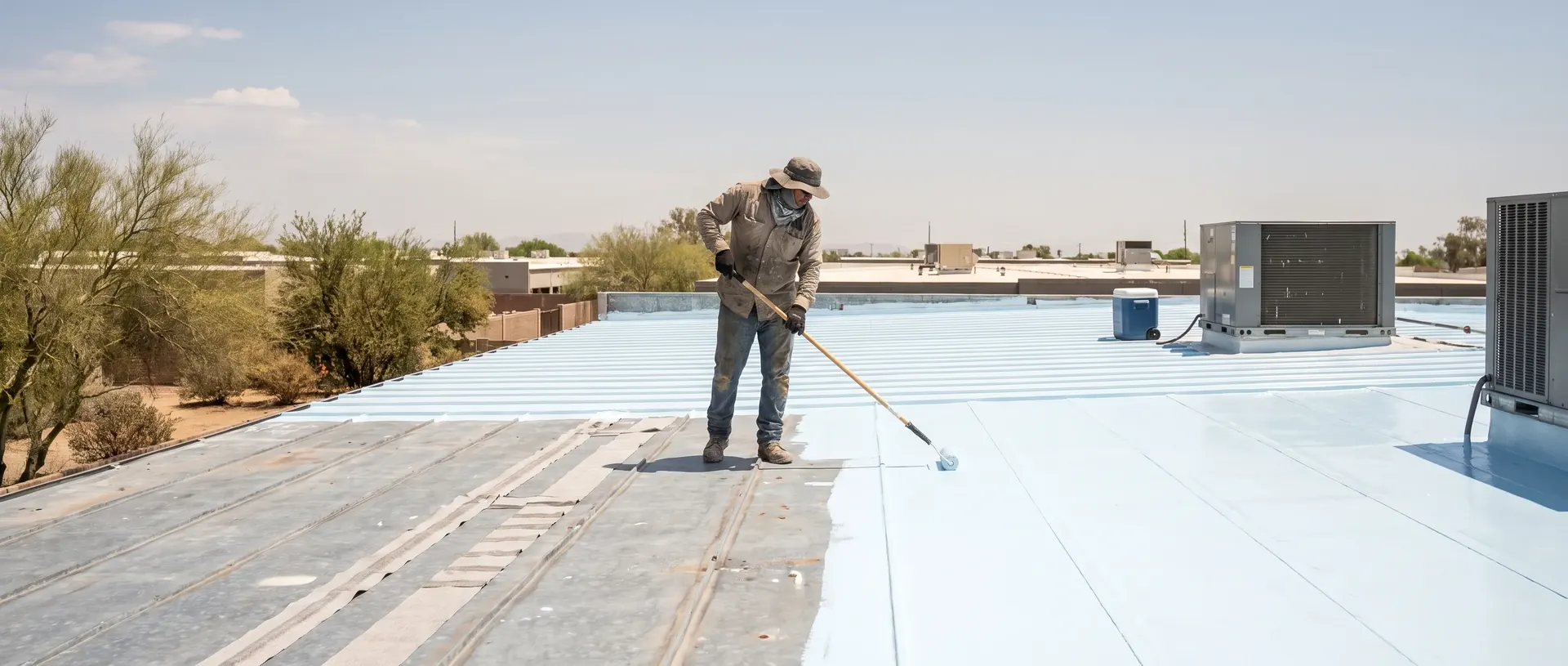
A roof coating is a liquid applied membrane. It goes on over the existing metal, cures into a continuous flexible skin, and takes over the job of shedding water and standing in front of the sun. On the right roof it is one of the best value things you can do, because it addresses the real enemy here, which is ultraviolet exposure, without anybody removing a single panel.
The important word is continuous. A coating works because it has no joints, so the thousands of small vulnerable points on an exposed fastener roof end up under one unbroken surface. That is also exactly why the preparation matters more than the coating. Every fastener, every lap and every penetration has to be sound and detailed before the coating goes over it, because once it is on, whatever is underneath is sealed in.
This is where coatings get a bad name. A coating rolled over a roof with backed out screws and open laps hides all of it beautifully for a while. Water still gets in at those points, now travels underneath the membrane where nobody can see it, and when the problem finally surfaces it is much harder to trace. A coating is not a way to avoid doing the repairs. It is what you do after the repairs.
The other honest limit is condition. A roof with pinholes, corrosion through the sheet or a compromised structure is not a candidate. Coating over rusted through metal buys very little and costs real money.
What a coating is right for
Weathered but sound roofs
Chalked, faded, oxidised panels with a lot of service life left in the metal. This is the ideal candidate. The roof is not failing, it has simply lost its original finish, and a coating restores the surface without replacing anything.
Roofs with many small vulnerable points
Long runs of exposed fasteners and end laps that are all approximately the same age. Detailing and coating the lot in one operation is often more sensible than chasing individual failures for the next few years.
Low slope roofs with poor drainage
Carports, Arizona rooms and patio additions with very little fall, where water sits rather than runs. A continuous membrane copes with standing water far better than a lapped panel system does.
What we do when we come out
We establish whether the roof is a candidate
This is the first and most important question, and sometimes the answer is no. A roof with corrosion through the sheet gets told that plainly rather than sold a coating.
We survey every detail that needs work first
Fasteners, laps, penetrations, trim and any wall transition. All of it has to be right before anything is applied.
We check the substrate and the drainage
Where water sits, how it gets off the roof, and whether the timber underneath has been wet.
We photograph everything
Each defect gets photographed where it sits. You get those pictures whether or not you have us do the work.
Process
How a coating goes on
Repair first
Failed fasteners replaced, open laps rebedded, damaged panels swapped, trim refastened. The roof has to be watertight before a coating is considered.
Clean the surface properly
Wash down to remove chalk, dust and anything else the Valley has deposited. Adhesion is entirely dependent on this step and it is the one most often rushed.
Prime where the system requires it
Some substrates and some coating systems need a primer, and skipping it because the day is getting hot is how a coating ends up peeling.
Detail the seams and fasteners
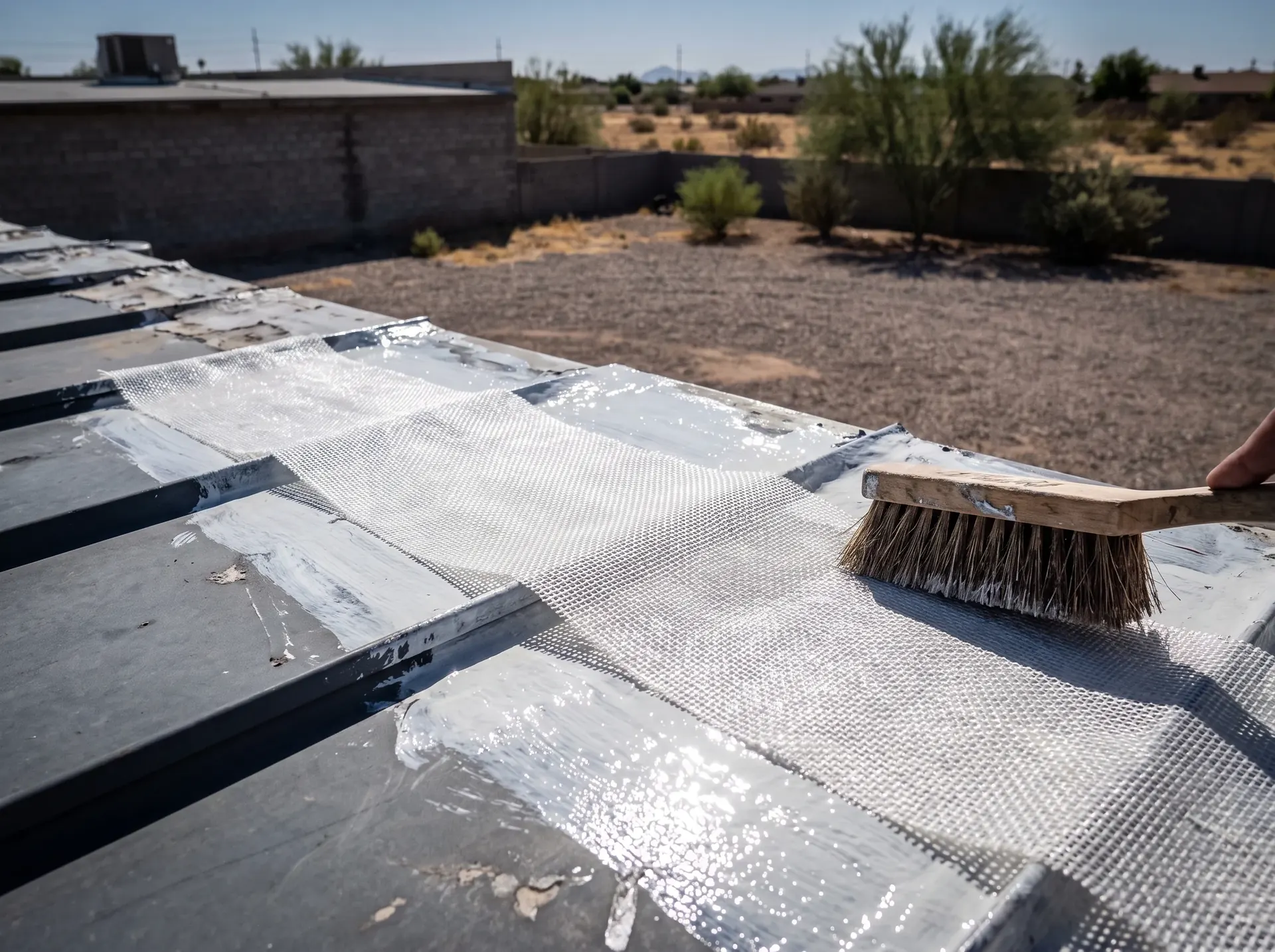
Reinforcing fabric or detail coat bedded over every lap, fastener line and penetration. These are the areas that move most and they need more material than the open field.
Apply the field coats
Rolled or sprayed to the system specified thickness, in the number of coats the system calls for, with proper cure time between them.
Inspect the finished membrane
Walked and checked for thin spots, pinholes and missed detail work, particularly around penetrations.
Why this goes better with us
We will tell you when it is not worth it
Coating a roof that is too far gone is easy money and we do not want it. If the metal has corroded through, you get told that.
We do the repairs before the coating
Every one of them, and you get photographs of what was fixed. A coating over unresolved defects is a way of hiding them, and it makes the next diagnosis much harder.
We do not quote you a number that sounds good
We will not tell you what percentage this will cut your cooling bill or how many years it is guaranteed for, because for your specific roof, in your specific situation, nobody honestly knows. What we will tell you is what the system is, what it does, and what condition your roof has to be in to take it.
We prepare properly even when it is hot
Surface preparation is the step that determines whether a coating is still there in several summers. It is also the step that is tempting to shorten on a July morning. We start early instead.
Roof looking chalky and tired
If the metal is sound underneath, a coating is often the best value repair available. If it is not, we will say so.
Reviews
What our customers say
We have not collected any reviews yet. When we do they will appear here in full.
Common questions about roof coatings
Is recoating a metal roof worth it?
On a roof that is structurally sound and simply weathered, it is often the best value work available, because it addresses sun damage across the entire surface at once without replacing anything. On a roof with corrosion through the metal it is money spent to delay a conversation. The condition of the roof decides the answer, not the price of the coating.
What is the best coating to put on a metal roof?
It depends on the roof rather than on a brand. Silicone systems handle standing water and ultraviolet exposure very well, which suits low slope Valley roofs. Acrylic systems are easier to work with and recoat. What matters far more than the choice is that the system is applied over a properly repaired, properly cleaned surface at the thickness it was designed for.
How long do metal roof coatings last?
Longer where the preparation was done properly and shorter where it was not, and that difference is larger than the difference between products. Sun exposure, roof slope, standing water and how much the panels move all affect it. Anyone quoting you a confident number for your particular roof without having been on it is guessing.
What are the disadvantages of roof coatings?
Two real ones. First, a coating conceals whatever is underneath, so defects that were not repaired first become much harder to find later. Second, it is a maintenance surface rather than a permanent one, and it will need recoating eventually. A coating also cannot fix a structural problem or metal that has already corroded through.
Can you have a metal roof repainted?
Painting and coating are different things doing different jobs. Paint is a finish and is mostly about appearance. A coating system is a thicker applied membrane whose job is waterproofing and protecting the roof from the sun. If the goal is to stop leaks and extend service life, a coating system is the relevant option.
How much does it cost to recoat a metal roof?
It scales with roof area, how much repair and detail work is needed first, how bad the access is and which system suits the roof. A roof needing extensive fastener and seam work before coating costs more than a roof that only needs washing. We price it after we have been up there.
Get a quote
Tell us what the roof is doing
A photo of the panel surface tells us most of what we need to know about whether a coating is right.
- Call
- (602) 555-0143
- Hours
- Mon to Sat, 6am to 5pm