Service
Metal roof inspection
Somebody has told you the roof needs replacing. Before you accept that, have somebody who does not sell roofs go up and look.
Photographs of everything, yours to keep
Metal Roof Inspection
A second opinion from somebody with nothing to sell you
The most common reason people call us for an inspection is that a roofing company has quoted them for a replacement and something about the conversation did not sit right. Sometimes the quote is entirely justified and we say so. Often it is not, and what the roof actually needs is a day of fastener and seam work.
We are in an unusual position to answer that question honestly, because we do not install metal roofs. There is no version of this where we look at your roof and discover that the best outcome for you happens to be the most expensive thing we sell. The only work we can do is repair, so if a roof genuinely is past repair, saying so costs us the job.
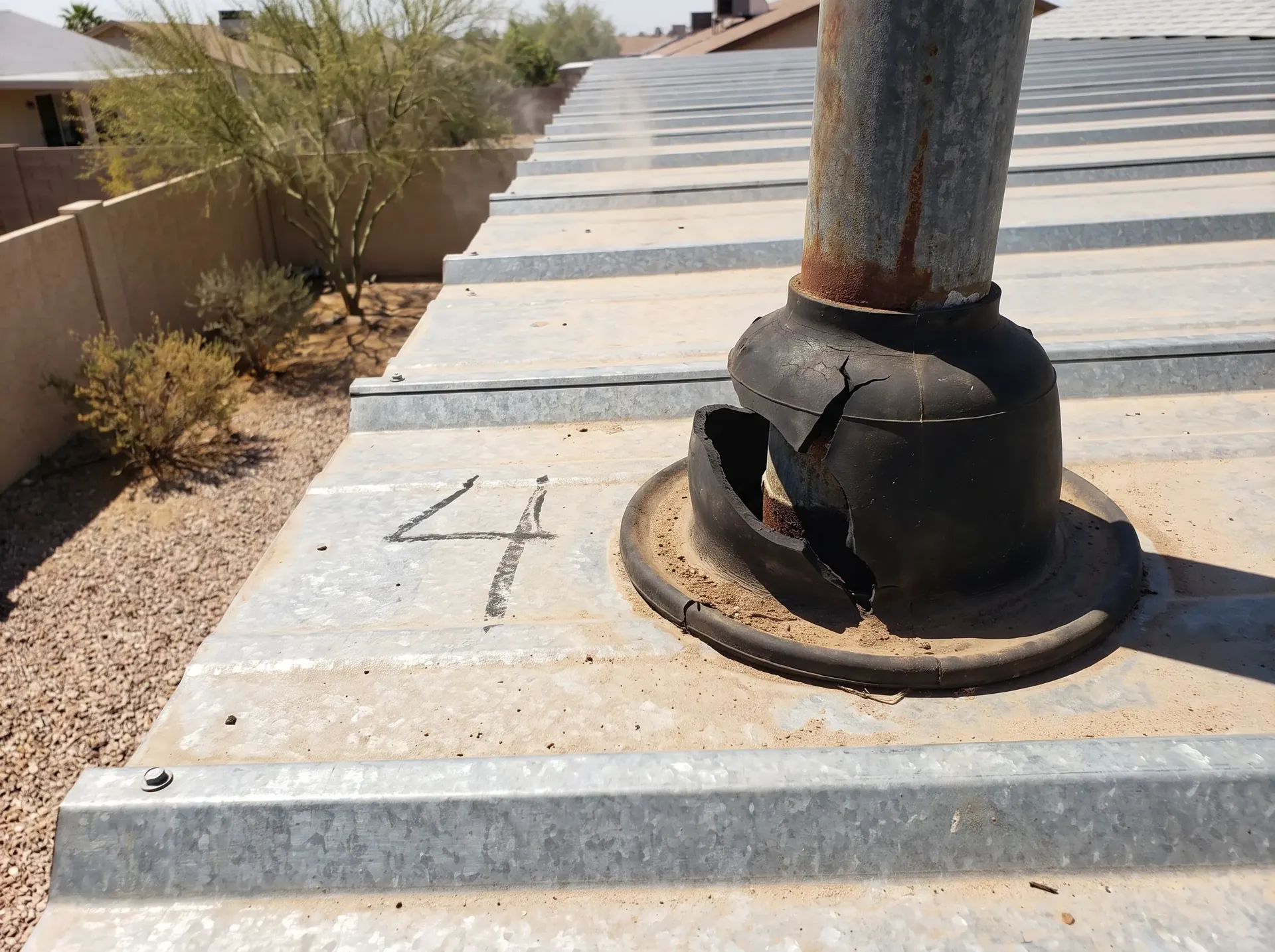
An inspection is also worth doing when nothing is obviously wrong. A metal roof gives a lot of warning before it leaks, and almost all of that warning is visible from on top of it and invisible from the ground. Screw heads standing proud, sealant that has gone hard in the laps, trim that has lifted at one end, a boot that has split. Every one of those is cheap to deal with in April and expensive to deal with in August with water coming through a ceiling.
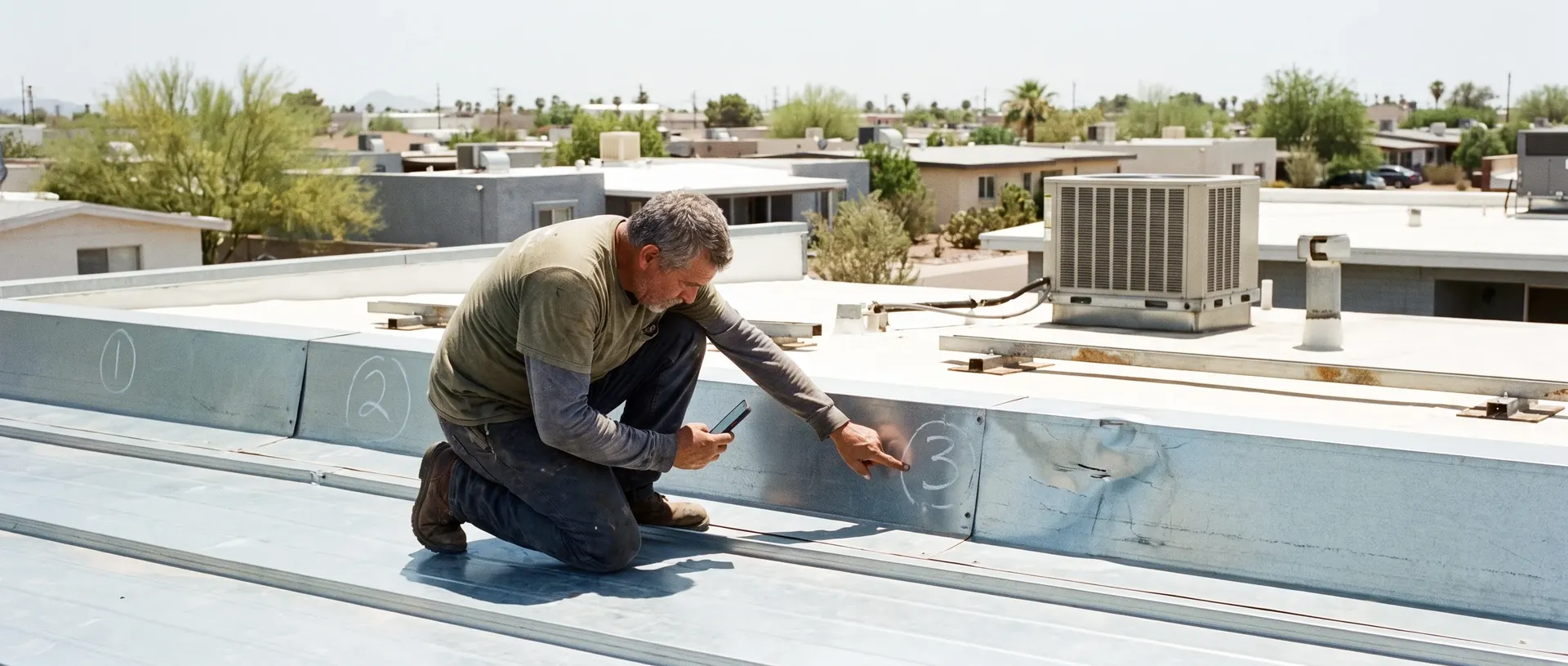
What you get is not a verbal summary. It is photographs of every defect, where it is, what it is, and whether it matters now or later.
What an inspection is for
Getting a second opinion on a replacement quote
You have a number for a new roof and you want to know whether the roof you have really is finished. This is the most common reason people call, and the answer is frequently no.
Finding out why it leaks
When a leak has been chased and sealed more than once and keeps coming back, the problem is nearly always that nobody has gone over the whole roof systematically.
Knowing what is coming
A planned look before monsoon season, so the things that are going to fail get dealt with in the cool part of the year rather than during a storm.
What we do when we come out
Every fastener run
Walked and assessed, not sampled. Fasteners fail in patterns and the pattern only shows up when you look at all of them.
Every joint and penetration
Side laps, end laps, ridge, hips, rakes, valleys, headwalls, sidewalls, pipe boots, vents, skylights, cooler curbs and solar mounting feet.
The structure and the underside
Where there is safe access to the space below, we look at the purlins and decking for staining, movement and any timber that has been repeatedly wet.
A written and photographed record
Every defect photographed where it sits, described in plain language, and sorted into what is urgent and what is not. The file is yours.
Process
How an inspection goes
Talk before we climb
What the roof has done, what it has had done to it, and what anybody else has already told you about it.
The ground and perimeter walk
A great deal is visible from below with a trained eye. Trim alignment, panel movement, staining on walls and streaks running down from something above.
The roof itself
Systematically, run by run, marking and photographing as we go. Early in the day through the summer, because a Valley metal roof is unworkable and genuinely unsafe by late morning.
Underneath where we can get underneath
Attic, patio cavity or open structure. Water tracks visible from below often explain something that looked harmless from on top.
Sort what we found
Urgent, coming soon, and worth knowing about. That ordering is the useful part of the report.
Go through it with you
Photographs on a screen, in plain language, with a straight answer to the repair or replace question.
Why this goes better with us
We cannot sell you a roof
It is worth saying plainly. We do not install, so an inspection that concludes your roof needs replacing is an inspection that ends our involvement. That is the whole reason this opinion is worth having.
We look at all of it
The most common failure of a roof inspection is that somebody looked at the area above the leak and went home. Defects cluster, and the ones that have not started leaking yet are the ones worth knowing about.
The photographs are yours
Not a summary, not a verbal report, not a quote with a couple of pictures attached. The full set, so you can take them to anybody else you like.
We start early in summer
Not a preference. A metal roof surface in July is hot enough to make careful work impossible and to be a real hazard, and anybody offering to inspect your roof at two in the afternoon in August is not going to do it properly.
Been told you need a new roof
Before you agree to that, get somebody who does not sell roofs to go up and look at it.
Reviews
What our customers say
We have not collected any reviews yet. When we do they will appear here in full.
Common questions about roof inspections
How much does a roof inspection usually cost?
It depends on the size and complexity of the roof and how much access there is to the space underneath. A single storey patio roof is a different job from a large low slope commercial run with a lot of equipment on it. We tell you the figure before we come out, not after.
What will fail a roof inspection?
On a metal roof the things that matter are perforation of the panels, structural movement or damage to the purlins and decking, and widespread corrosion through the sheet. Backed out fasteners, perished sealant, lifted trim and split boots are all repairable and none of them means the roof has failed, even though they are frequently presented that way.
How to tell if a roofer is legit?
Ask what happens to the photographs. Anyone confident in their assessment will hand you the full set of images without hesitation, because the evidence supports what they are telling you. Be careful with an assessment that arrives as a replacement quote with no documented defect list behind it.
Should a 20 year old roof replace?
Age on its own says very little about a metal roof, because the components that wear out are the fasteners, sealants and coatings rather than the metal. A twenty year old metal roof that has had its fixings looked after can be in better condition than a ten year old one that has never been touched. Condition decides, not the calendar.
Is a 20 year old roof considered old?
For a shingle roof that is well into its life. For metal it is often barely middle aged. That difference is the reason a general roofing assessment sometimes undervalues a metal roof, and it is one of the more common reasons a replacement gets recommended when a repair would do.
How long should a roof last before leaking?
A metal roof will generally start showing small failures at fasteners and sealant well before anything happens to the panels, and in this climate that can be sooner than owners expect because of the sun. A first leak is not the end of the roof. It is the roof telling you the consumable parts have reached the end of their life.
Get a quote
Tell us what the roof is doing
If somebody has already given you a replacement quote, tell us what they said was wrong with it.
- Call
- (602) 555-0143
- Hours
- Mon to Sat, 6am to 5pm