Service
Monsoon and storm damage repair
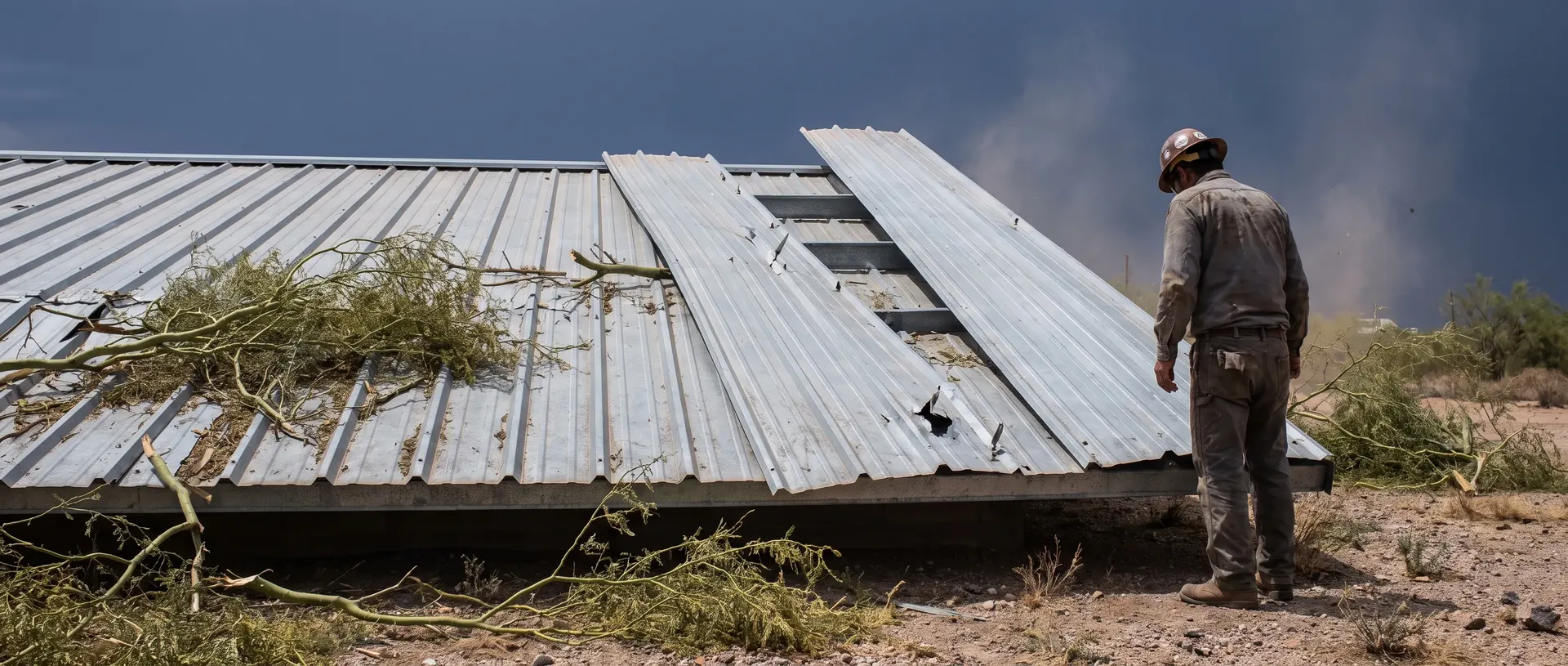
A microburst does not damage a metal roof evenly. It finds the one edge that was already slightly loose and takes it from there.
Documented properly for a claim
Monsoon and Storm Damage Repair
How a monsoon actually takes a roof apart
Wind does not push a metal roof down. It lifts it. Air moving fast across the top of a panel drops the pressure above it while the pressure underneath stays where it was, and the panel gets pulled upward. That is why storm damage on a metal roof starts at the edges and the ridge rather than in the middle, and why it so often begins at a corner.
A monsoon microburst does this in an unusually violent way. Instead of a steady wind from one direction, you get a column of air hitting the ground and spreading out fast in all directions, with sharp gusts arriving from angles a roof was never really tested against. Add whatever the storm has picked up along the way, which in this Valley means palo verde branches, gravel, patio furniture and pieces of somebody else's roof.
What we tend to find afterwards is a chain rather than a single event. A ridge cap or a length of gable trim that had two fasteners already backed out gets lifted first. That exposes the top edge of the panels underneath. Wind gets into that opening, and now it is working on the panels themselves. The damage looks dramatic, and the thing that let it start was a fastener that had been standing proud since last summer.
Open lots make this considerably worse. Newer parts of the Valley with no mature trees and no windbreak give a storm a clean run at a roof, which is why we see so much trim and leading edge damage on the newer edges of town.
What a storm leaves behind
Lifted and bent panels
Panels pulled up at the leading edge, folded back on themselves, or dragged sideways against their fasteners until the holes tear into slots. Once the fastener holes have elongated, the panel will not seal again even if it is pushed flat.
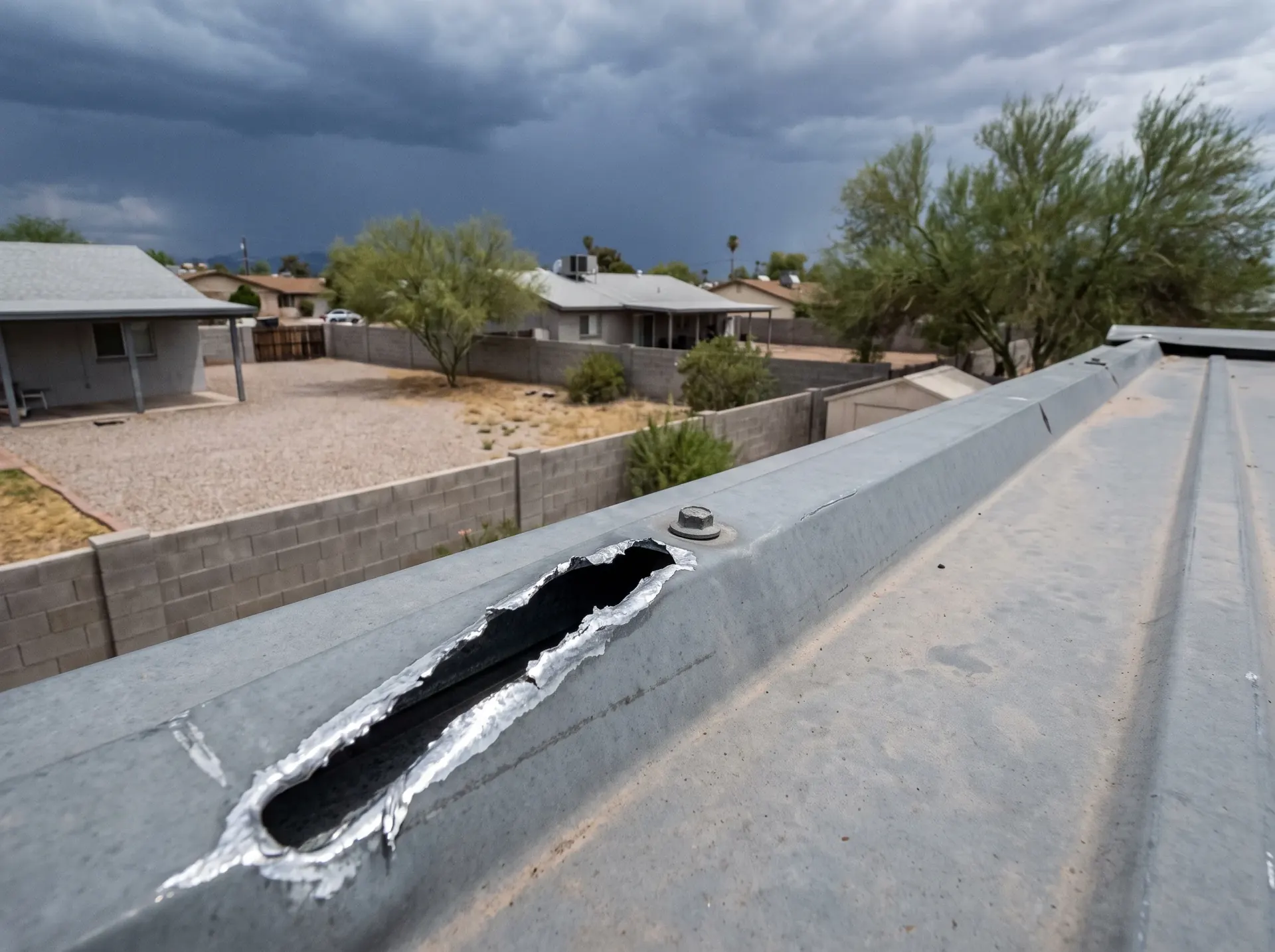
Peeled ridge caps and trim
Ridge, hip, rake and gable trim taken partly or completely off. This is the most common monsoon damage we attend, and it is often the thing that let everything else happen.
Impact punctures and dents
Debris damage. A branch through the flat of a panel is repairable. A crushed rib usually means that sheet has lost its structure and needs replacing.
What we do when we come out
We make it safe and dry first
If water is still getting in, stopping that comes before anything else. A properly weighted and fastened temporary cover is not the repair, but it stops the damage growing while the repair gets organised.
We document before we touch anything
Photographs of the damage as we found it, including wide shots that show where on the roof it sits. Once we start work that evidence is gone, and if there is going to be a claim it is the most valuable thing on the roof.
We look for what started it
Storm damage almost always begins at an existing weakness. Finding that matters, because repairing the visible damage without addressing the cause means the next storm does the same thing.
We check the whole roof, not the damaged part
Wind that lifted one section has usually loosened others. Fasteners get checked across the roof, not just where the metal is bent.
Process
How storm work goes
Stop active water
Temporary covering if the roof is open and more weather is coming. Weighted and fastened properly, not thrown over and hoped for.
Photograph the scene
Damage as found, from multiple angles, with enough context to show where each piece sits on the roof.
Assess the full extent
Panels, trim, fasteners, laps and penetrations across the whole roof. Wind damage is rarely as local as it looks.
Separate storm damage from pre existing wear
This matters for a claim and it matters for honesty. A backed out fastener from three summers ago is not storm damage, and we will not present it as such.
Repair and refasten
Trim replaced and refastened, damaged panels swapped, torn fastener holes upsized or the sheet replaced where the holes are beyond it.
Test and hand over the file
Water test where appropriate, and all photographs and notes handed to you in a form you can send to an adjuster.
Why this goes better with us
We document before we repair
The most common mistake after a storm is getting it fixed fast and photographing nothing. If you might claim, the evidence has to be captured before the repair, and we do that as a matter of course.
We do not inflate the damage
There is a well established pattern after a monsoon of storm damage becoming a reason for a whole new roof. We do not install roofs, so we have nothing to gain from that conversation, and what we write down is what we found.
We fix the thing that let it start
Replacing a torn off ridge cap without addressing the loose fasteners either side of it means doing this again after the next cell comes through.
Active leaks come first
During monsoon season, roofs that are actively letting water in are taken ahead of scheduled work.
Storm damage on a metal roof
Photograph it from the ground before anyone gets up there, then call us.
Reviews
What our customers say
We have not collected any reviews yet. When we do they will appear here in full.
Common questions about storm damage
What is the monsoon season in Phoenix, AZ?
It runs through the summer, roughly from the middle of June to the end of September, with the most active weather usually in July and August. What matters for a roof is not the calendar but the character of the storms: sudden, violent, short lived, with severe wind gusts and heavy rain arriving together and often from an unexpected direction.
Does homeowners insurance cover roof damage from storms?
Sudden accidental damage from wind and debris is generally treated very differently from gradual wear, and that distinction is usually the crux of a claim. Our job is to document what we find accurately, including which damage is storm related and which was already there. What your policy actually covers is between you and your insurer.
How long after a storm can you claim roof damage?
Policies set their own reporting deadlines and they vary, so the practical advice is to report it promptly and photograph everything immediately. Waiting also allows an open roof to keep taking water, which turns a straightforward repair into a much larger one.
What to do if your roof starts leaking during a storm?
Contain the water inside, move what you can out of the way, and do not go up on a metal roof in a monsoon. A wet metal panel in high wind is genuinely dangerous. If it is safe to do so from inside, put something under the drip and photograph what is happening, then call once the storm has passed.
Can you fix a leaking roof while it's raining?
Properly, no. Sealants and tapes need a clean dry surface to bond, and a repair made on wet metal will fail. What can be done during weather is temporary covering to stop water getting in, and that is worth doing. The actual repair happens on a dry roof.
How long does it take to repair storm damage?
Most metal roof storm repairs are a matter of hours to a day once the materials are on site. The delay is usually in sourcing matching trim or panel profile, and after a widespread event, in the number of roofs needing attention at once.
Get a quote
Tell us what the roof is doing
If you have photographs from before anyone got on the roof, send those too.
- Call
- (602) 555-0143
- Hours
- Mon to Sat, 6am to 5pm