Monsoon
What to check on a metal roof after a monsoon storm
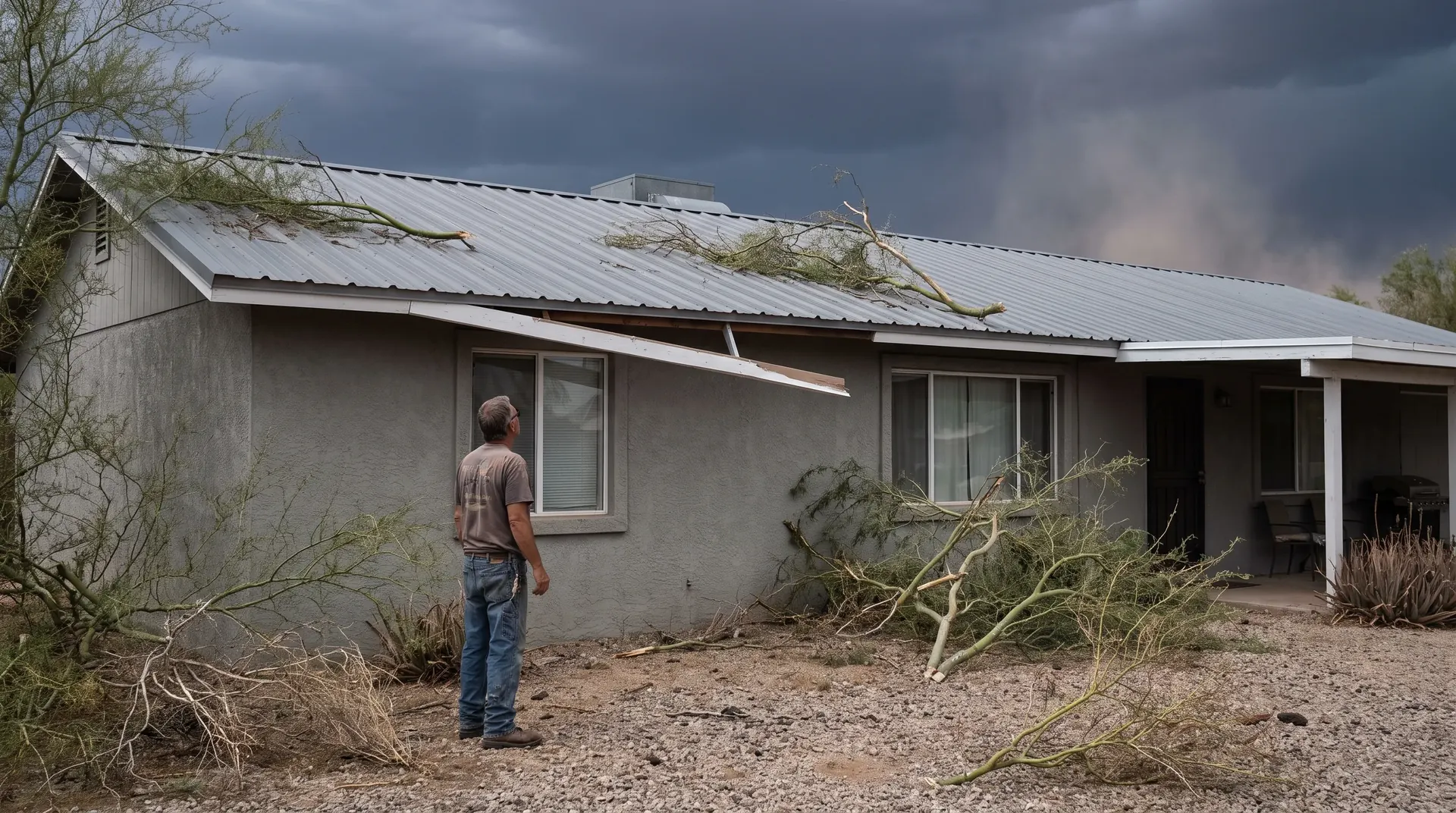
A monsoon cell can pass over in twenty minutes and leave a roof that looks completely fine from the driveway and is not. Metal roof storm damage is often subtle, and the parts that matter most are at the edges where they are hardest to see.
Here is what to look at once the weather has gone through, in the order worth looking at it, all of it from the ground.
Do this from the ground, all of it
Do not get on the roof to check it. That applies whether the metal is wet from the storm or dry and hot the next afternoon, and both states are dangerous for different reasons.
Wet metal at any pitch is extremely slippery, and a low slope roof gives you nothing to stop against at the edge. Dry metal in a Valley summer reaches surface temperatures that will burn you on contact and will soften the soles of ordinary shoes. Add a roof that may have loose panels or a compromised structure after a storm, and there is no version of this that is worth the look.
Everything below can be done from the ground, from a window, or from a ladder placed at the edge without stepping onto the roof.
1. The edges and the ridge, first
This is where storm damage starts, so it is where to look first. Wind lifts a roof rather than pressing it down, and uplift is strongest at corners, then along edges and ridges.
Look along the ridge line, the gable ends and the eaves. You are looking for anything that is no longer straight: a section of ridge cap sitting higher than the rest, a length of gable trim standing away from the roof, a lifted corner on a patio cover. A trim line that has developed a kink or a wave in it has moved.
2. The ground around the building
Walk the perimeter and look at what is lying about. Pieces of trim, fasteners, sections of panel and unfamiliar bits of metal in the gravel all came from somewhere, and quite often from your roof rather than a neighbour’s.
Photograph anything you find where it is lying before you pick it up.
3. The panel field, from a distance
Stand back far enough to see the whole roof plane and look across it rather than at it. Panels that have lifted and dropped back often do not look damaged from directly below but show as a ripple or an uneven reflection when you look along the surface at a shallow angle.
Early morning or late afternoon light makes this much easier, because low sun exaggerates any deviation in a flat surface.
4. Anything mounted on the roof
Evaporative coolers, package units, solar arrays, vents and skylights. Look for anything that has shifted, tilted or lost a cover. A unit that has moved has usually damaged the flashing around its base even if the unit itself is fine.
5. Inside, over the next few days
Not everything shows immediately. Check ceilings, the tops of interior walls and any accessible attic or patio roof cavity over the days after a storm, particularly after the next rain. A staining that appears three days later is telling you the roof was opened up by the storm.
What needs attention now, and what can wait
Urgent means the roof is open or about to be. A displaced or missing panel, a section of ridge cap gone, trim hanging loose, or any active water coming in. All of those get worse with the next cell, and monsoon season delivers more cells.
Less urgent means the roof is still closed. Small dents in the flat of a panel, cosmetic damage to trim that is still fastened, minor debris scarring. Those want looking at, but they are not going to turn into interior damage next week.
If you are unsure which you have, treat it as urgent. A roof that is open and gets another storm is a much larger job than one that was covered in time.
Photograph before anybody touches anything
This is the single most valuable thing you can do in the hours after a storm, and it costs nothing.
Photograph the damage as it is, from several angles, including wide shots that show where on the building each thing sits. Include the debris on the ground where it landed. Note the date. If a temporary cover goes on, photograph the damage before it does and the cover after.
The reason is simple. Once a repair has happened, the evidence of what was damaged is gone, and reconstructing it afterwards is much harder than recording it at the time.
Common questions
What to do if your roof starts leaking during a storm?
Contain the water inside, move anything valuable out of the way, and stay off the roof. A metal roof in high wind and rain is not a place to be. Photograph what is happening inside if you safely can, and call once the cell has passed.
Can you fix a leaking roof while it's raining?
Not properly. Sealants and tapes need a clean dry surface to bond and a repair made on wet metal will fail. What can be done in weather is temporary covering to stop water getting in, which is worth doing. The real repair happens on a dry roof.
Does homeowners insurance cover roof damage from storms?
Sudden accidental wind and debris damage is generally treated differently from gradual wear, and that distinction usually decides the outcome. Document everything honestly, including which damage predates the storm. What your policy covers is between you and your insurer.
How long after a storm can you claim roof damage?
Policies set their own reporting deadlines and they vary, so report promptly. There is also a practical reason not to wait, which is that an open roof keeps taking water through the rest of the season and a small repair becomes a large one.